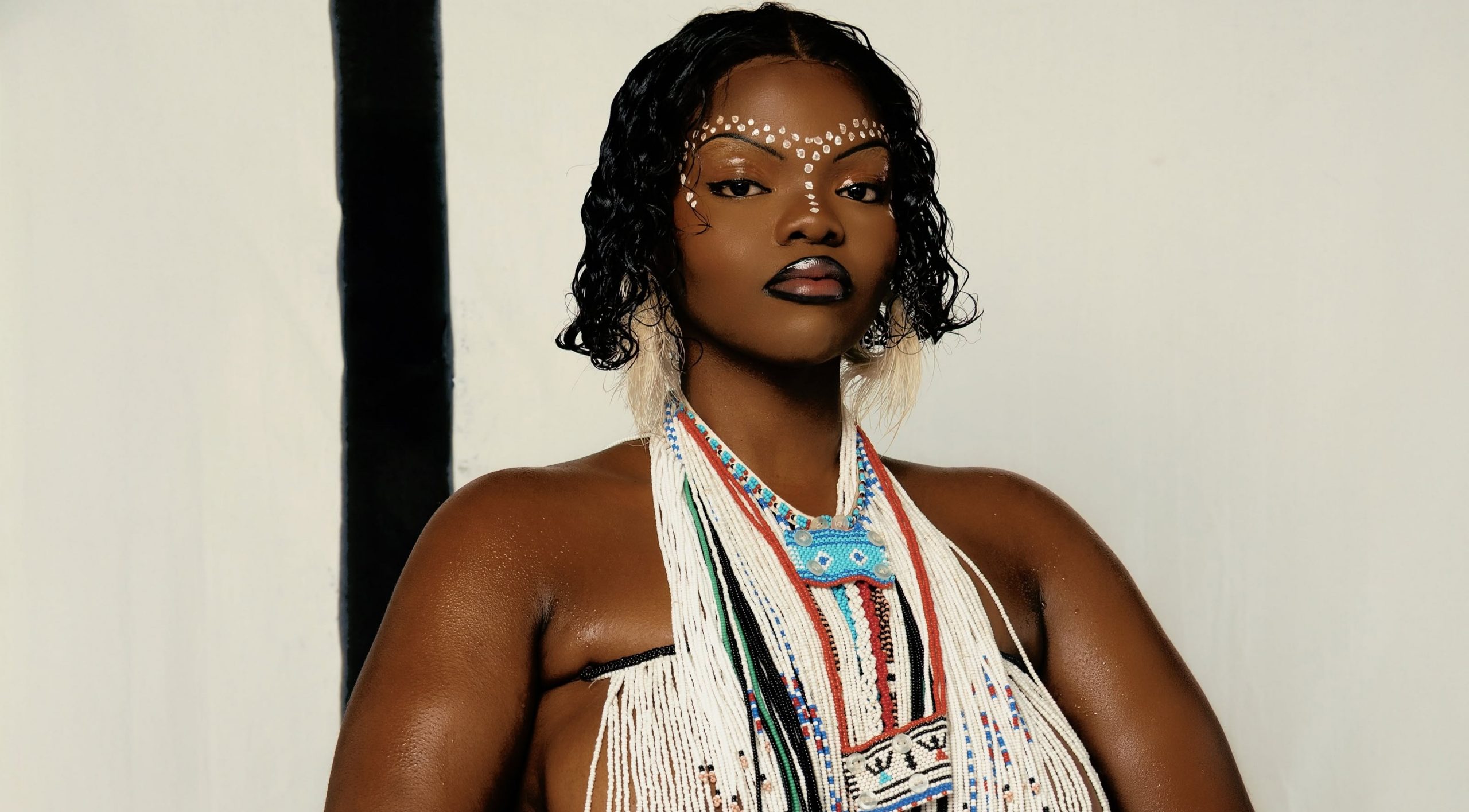
South African singer-songwriter Makhanj has opened up about the difficult realities of pursuing music full-time, revealing that she seriously considered returning to her career as an attorney before releasing her latest album, Transkei.
Speaking in an interview with TheJournalistDJ.com, the Eastern Cape-born artist reflected on the journey behind the project, her Xhosa heritage, leaving the legal profession and the financial pressures that can come with choosing a creative career.
‘Before I dropped Transkei, I was really thinking about going back to work’
Before establishing herself in music, Makhanj qualified as an attorney, a career she says was strongly influenced by the importance her family placed on education.
While she is no longer practising law, Makhanj admitted that the uncertainty of the music industry almost pushed her back towards her previous profession.
“Before I dropped Transkei, my album, I was really thinking about going back to work,”
she revealed.
“Music is really difficult, guys. Like, any passion is really difficult.”
For Makhanj, pursuing a passion shouldn’t mean accepting a life where artists aren’t financially rewarded for their work.
“I don’t believe that we need to be that passionate that we don’t get paid. I actually don’t believe that,”
she said.
She acknowledged that building a creative career can require sacrifice and persistence before it becomes financially sustainable, but said there was a point where she questioned whether continuing with music was realistic.
“There was a time where I was like, ‘I don’t wanna do this anymore,’ because at the end of the day, as much as it’s a passion thing, I do need to pay for stuff. I need to do things.”
Education was non-negotiable in Makhanj’s family
Makhanj also reflected on growing up in a family where education was taken seriously.
Rather than preventing her from pursuing music, her mother encouraged her to follow her creative ambitions — on the condition that she first completed what she had initially set out to achieve.
“In my family, school was very important, so all of us had to go to school,” Makhanj explained.
Her mother told her: “You can do whatever you wanna do. Just finish the thing that you wanted to do.”
For Makhanj, that meant becoming an attorney first.
Once she had achieved that goal, however, music increasingly became something she believed she could pursue seriously.
‘Transkei’ is Makhanj’s love letter to where she comes from
Her latest project takes that journey back to its roots.
Makhanj named the album Transkei as a deliberate celebration of her Eastern Cape upbringing and Xhosa identity, explaining that artists should not only preserve indigenous languages through music but also acknowledge the places those languages and cultures come from.
“I think it’s very important for us to know our languages,” she said.
While celebrating the number of artists singing in isiXhosa, Makhanj believes there is also value in putting specific communities and regions at the centre of those conversations.
“It’s very important for us to not just sing in the language, but to also shout out to certain areas that the language comes from,” she explained.
“And that’s where, one of those places is where I’m from. So shout out to Umtata.”
Makhanj surprised by response to her own music
The reception to Transkei has also given Makhanj another reason to believe in her decision to remain in music.
Although she was confident about the album before releasing it, she admitted there is always uncertainty about how listeners will react once a project leaves the studio.
“I knew this was a good album. I don’t wanna lie,” she said.
What has surprised her is how listeners have responded across several songs rather than gravitating towards only one record.
She singled out collaborations involving Mellow & Sleazy, Stixx and Atmos Blaq, among others, saying she has been watching the numbers continue to grow.
“I’m looking at the numbers, and it’s shocking me every day,” she said. “So I really, really appreciate the support.”
Collaborations remain part of her musical identity
Makhanj has become a familiar voice through collaborations with other South African artists, and she has no intention of abandoning that part of her creative process.
“I’m an artist that loves to feature with other artists, and I will continue to do so,” she said.
But Transkei has also shown her something different: listeners are interested in Makhanj herself, beyond the collaborations and artists surrounding her.
“It shocked me how much people really were there for my thing,”
she said.
For an artist who, shortly before the album’s release, was considering returning to the legal profession, that response carries additional significance.
Makhanj ended the conversation by encouraging listeners to continue streaming Transkei, sharing their favourite songs and creating videos using the music.
“Please continue to make the videos. They really help a lot,” she said. “I’ll see you at my next show. And I love you guys so much, and thank you guys for always supporting me.”